
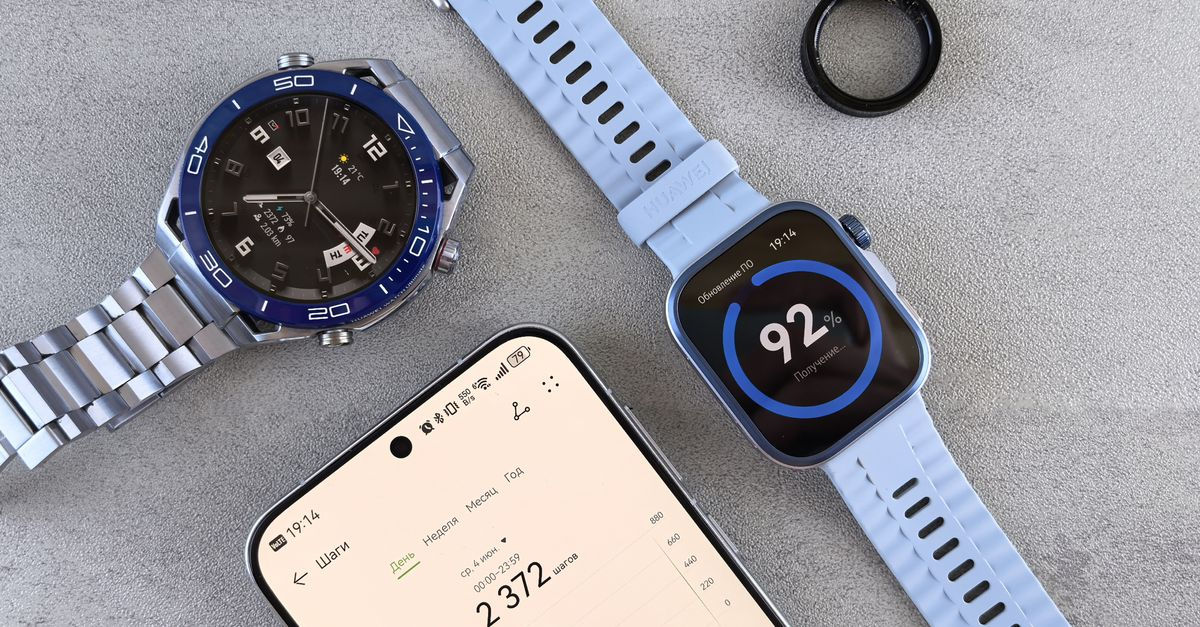
From Step Counter to Clinical Companion: Wearables' 2026 Turning Point
Wearables have quietly crossed a threshold in 2026. The category is no longer about counting steps, it's about AI turning continuous biometric data into clinical-grade insight. The global wearable technology market was valued at $92.90 billion in 2025 and is projected to reach $229.97 billion by 2033, a 12.1% CAGR, and Grand View Research attributes that growth almost entirely to AI integration rather than new hardware form factors alone.
The Rise of the Screenless Device
Smart rings are the clearest signal of where the category is heading. The smart ring market alone is forecast to grow from $697.6 million in 2025 to $7.8 billion by 2035, a 25.4% CAGR, as devices like the Oura Ring 4, Samsung Galaxy Ring, and RingConn Gen 2 Air win over users who want continuous tracking without a screen on their wrist. Roughly two in five new wearables now ship with built-in AI features, and the wearable AI market alone is projected to add $65 billion in incremental growth by 2030.
From Raw Data to Clinical Signal
Machine learning models now filter sensor noise and personalize baselines per user, flagging anomalies that may indicate early-stage conditions in real time
Sleep apnea and disorders are increasingly identified from overnight SpO2, heart rate variability, and breathing rate patterns
Metabolic stress is being tracked through continuous glucose trends correlated with activity, sleep, and recovery data
Oura's clinical partnerships and WHOOP's research collaborations are building the infrastructure for wearable data to inform medical decisions under clinical oversight
Adoption Has Gone Mainstream
The American College of Sports Medicine has named wearable technology the top global fitness trend for 2026, and ownership data backs that up: India, China, and the UK have all crossed the 50% household ownership mark, and smartwatches now reach roughly 8.13% of the global population. Huawei overtook Apple in Q1 2025 wrist-worn shipments with 25.5 million units, up 21.7% year over year, even as Apple retains the largest single-vendor smartwatch share.
The Data Has Real Limits
Not every signal is equally reliable yet. Industry analysis notes that AI models trained predominantly on younger, lighter-skinned, Western populations may perform less accurately for underrepresented groups, and clinicians increasingly stress that wearable-derived scores should be treated as directional guides rather than precise diagnostic measurements.
What It Means for the Market
Wearables have moved past the point where hardware alone differentiates a product, the real competitive battleground is now the AI interpretation layer sitting on top of the sensors. Vendors investing in clinical partnerships, algorithm fairness across demographics, and genuinely actionable personalization are best positioned to convert today's mainstream ownership into the kind of clinical-grade trust that unlocks healthcare and insurance partnerships next.
Related Reports
Explore our latest coverage of AI and connected health-adjacent markets:


Comments